
Google Chrome allows several ways to route traffic through a proxy server. This article explains how to use Chrome with the system proxy on Windows, and also mentions alternatives via extensions and desktop proxy clients. It is part of our main guide to proxy configuration in standard browsers.
Chrome is a Chromium based browser and on Windows it does not have its own separate proxy menu. Instead it relies on the operating system network settings. You can either change the Windows proxy configuration that Chrome reads, use proxy extensions inside the browser, or rely on standalone proxy clients that redirect application traffic.
Configuring a proxy in Google Chrome
Chrome on Windows uses the system proxy settings. The steps below show how to open the Windows proxy dialog from inside Chrome and enter your proxy server data.
Step 1. Open Chrome settings
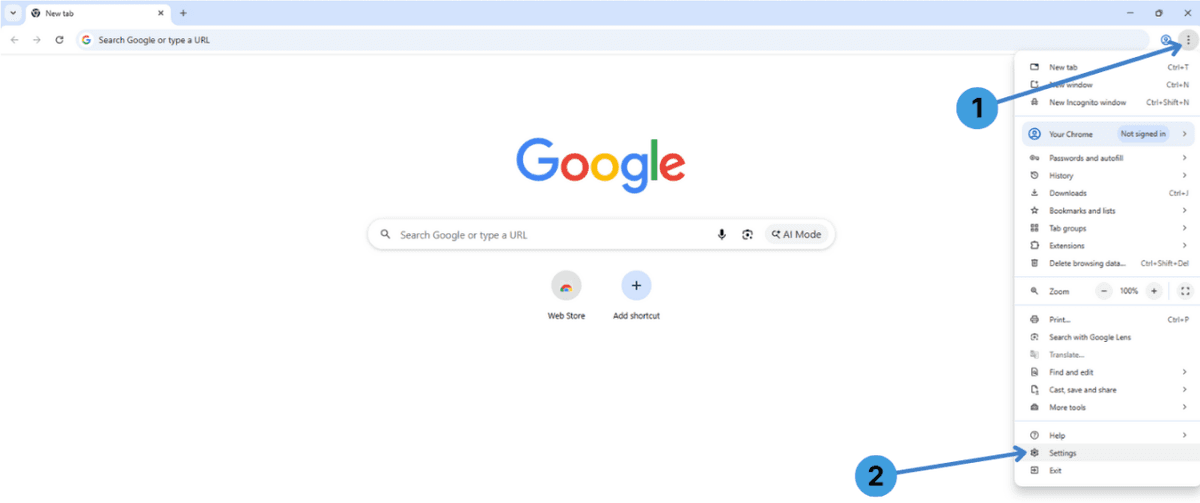
On the main Chrome window, click the three dots menu in the top right corner (1) and choose “Settings” (2) from the dropdown.
Step 2. Open system proxy settings
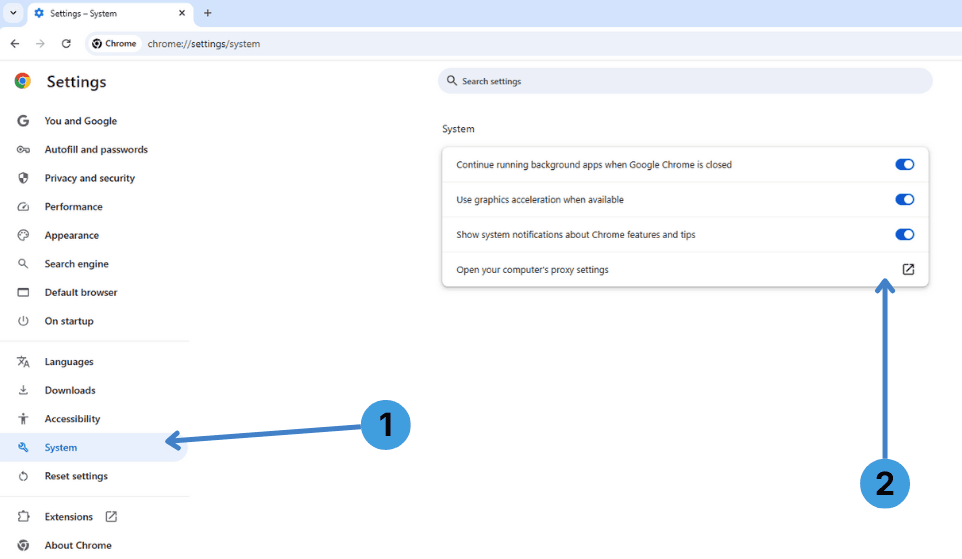
In the Settings tab, select “System” in the left sidebar (1). On the right, click “Open your computer’s proxy settings” (2). Windows Settings will open on the Network & internet → Proxy page.
Step 3. Open manual proxy setup
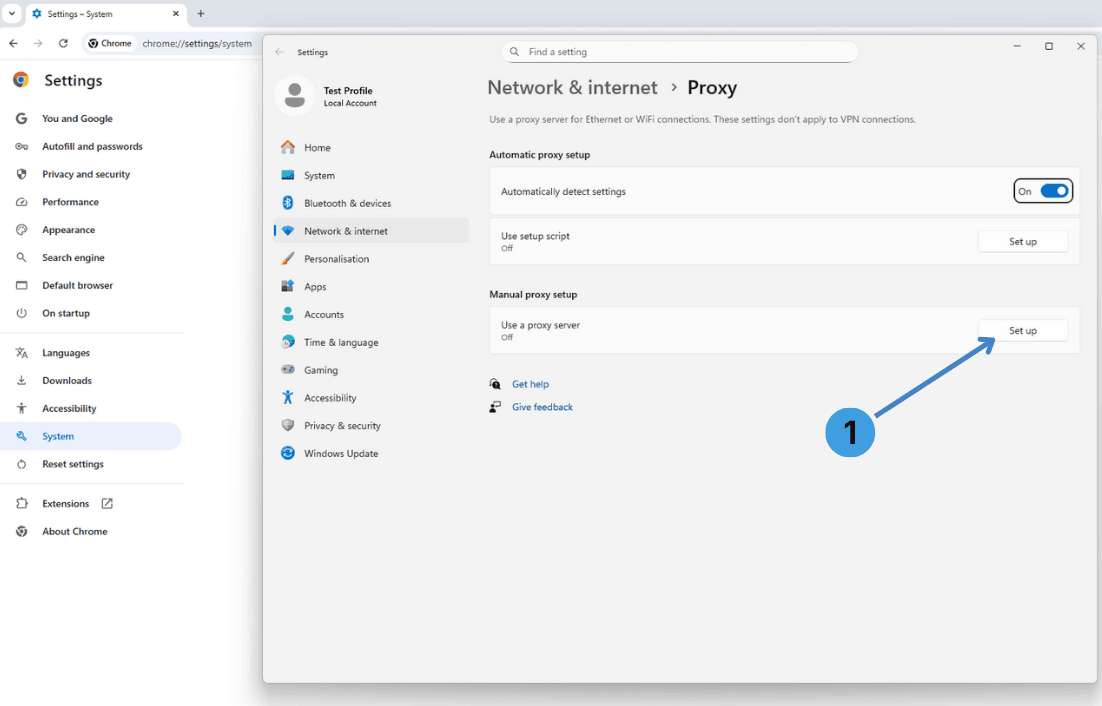
In the Windows proxy window, under “Manual proxy setup”, click “Set up” (1) next to “Use a proxy server”.
Step 4. Configure the proxy server
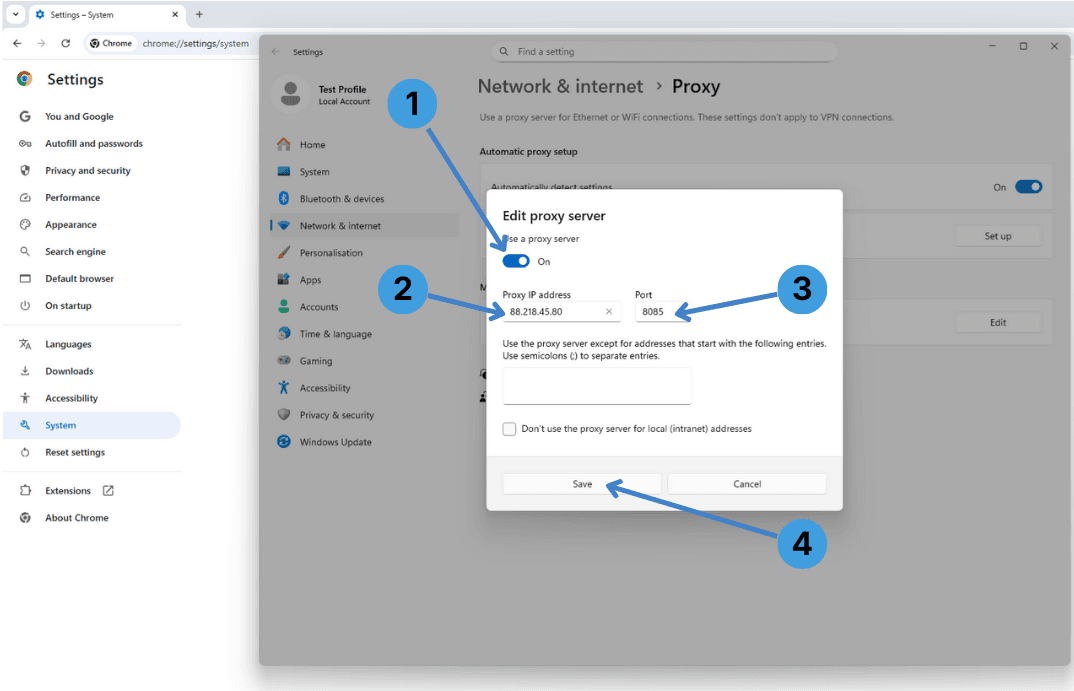
In the Edit proxy server dialog:
- Turn “Use a proxy server” to On (1).
- Enter the proxy server address in “Proxy IP address” (2). This is the host or IP supplied by your provider.
- Enter the proxy Port (3), such as 8080 or another value from your provider.
- Click “Save” (4) to apply the settings.
From now on, Chrome and other apps that rely on the Windows system proxy will send traffic through this proxy server.
Step 5. Disable the proxy when you are done
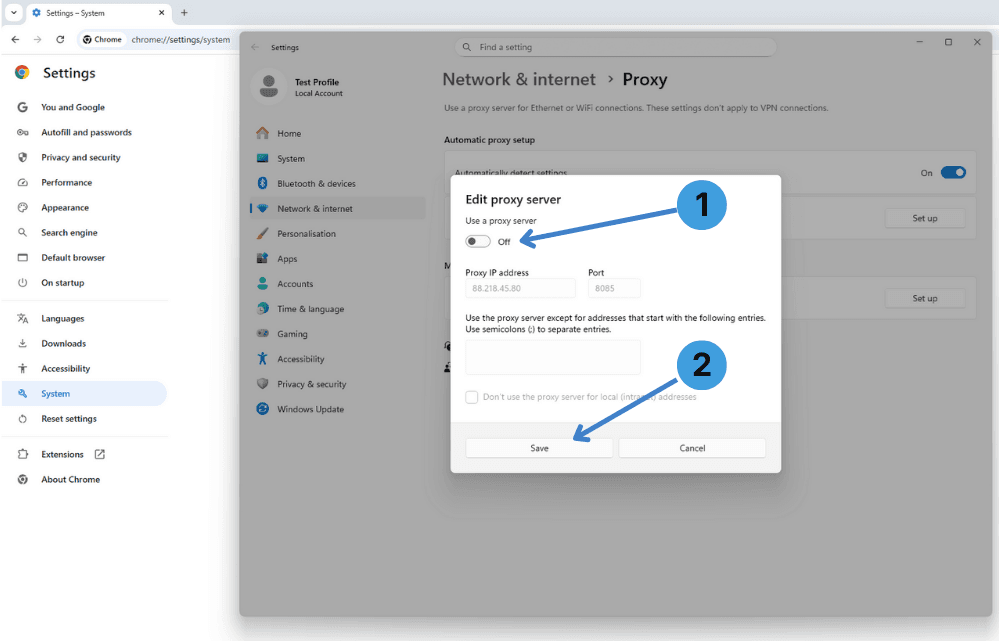
To turn the proxy off, return to the same Edit proxy server dialog:
- Switch “Use a proxy server” to Off (1).
- Click “Save” (2).
Chrome will go back to direct internet access without using the proxy.
Alternative 1: proxy extensions in Google Chrome
Another option in Chrome is to control proxies through browser extensions. Chrome supports add-ons from the Chrome Web Store, so you can install tools such as SwitchyOmega, FoxyProxy, Proxy Switcher, or similar managers to switch between multiple proxy profiles without changing Windows settings each time.
These add-ons usually let you store several proxy servers, choose protocols like HTTP or SOCKS5, and enable or disable them per tab or per window. For more background on this method, see this explanation of proxy add-ons for browsers.
Alternative 2: using standalone proxy clients with Chrome
If you prefer not to touch either Windows proxy settings or Chrome extensions, you can use standalone proxy clients. Programs such as Proxifier or ProxyCap run on the desktop and can route all system traffic or only selected applications, including Chrome, through a proxy server. This is useful when you manage many apps at once or need rules per process or destination. A short overview of such tools is available in this summary of desktop proxy clients.
Conclusion
Google Chrome relies on the Windows proxy configuration, which makes it easy to apply one proxy to the whole system directly from the browser settings. For more flexible control you can instead use proxy extensions or standalone proxy clients. Choose the method that matches how you work with multiple apps and proxy profiles.