
Yandex Browser allows several ways to connect through a proxy. This article explains how to point the browser to a proxy via the system proxy panel, and then briefly covers alternatives with extensions and desktop proxy tools. For a broader context of browser setup, see our general overview of proxy setup in regular browsers.
Yandex Browser is based on the Chromium engine. It does not have a full proxy dialog of its own and instead opens the operating system’s proxy settings. On top of that, it can use Chrome-compatible proxy extensions and also works with system-wide proxy clients that redirect traffic for selected applications.
Step by step: proxy configuration in Yandex Browser
This method uses Yandex Browser’s link that opens the system proxy settings, where the actual proxy server details are entered.
Step 1. Open the browser menu and settings
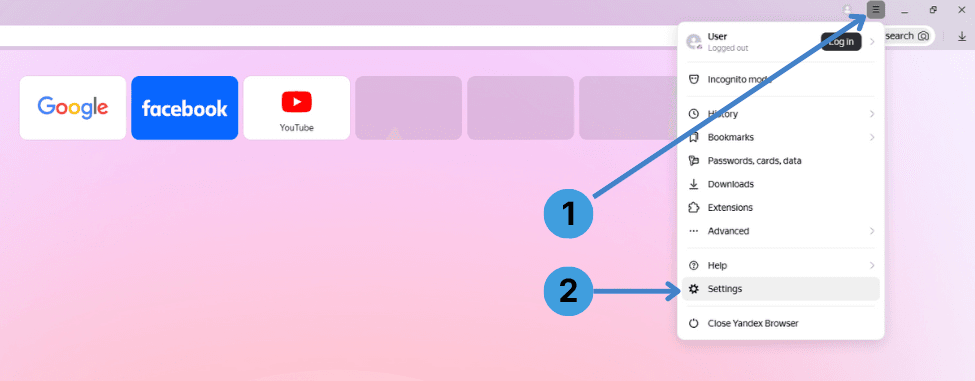
Click the menu button in the top right corner of Yandex Browser, then choose Settings.
Step 2. Go to System and open proxy settings
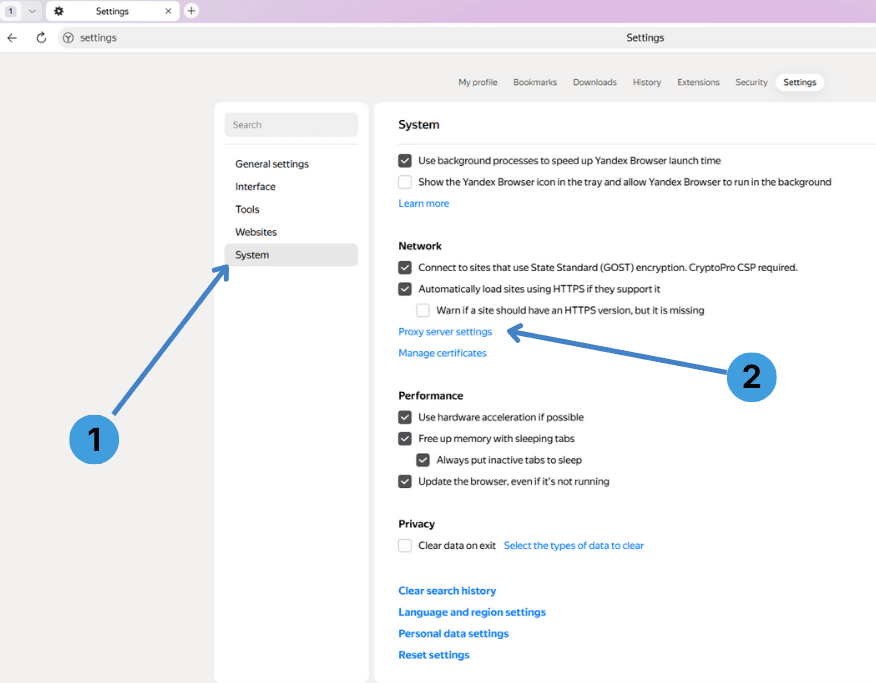
In the left sidebar of the settings page, switch to the System section (1). Under Network, click Proxy server settings (2). The system proxy configuration window will appear.
Step 3. Start manual proxy setup
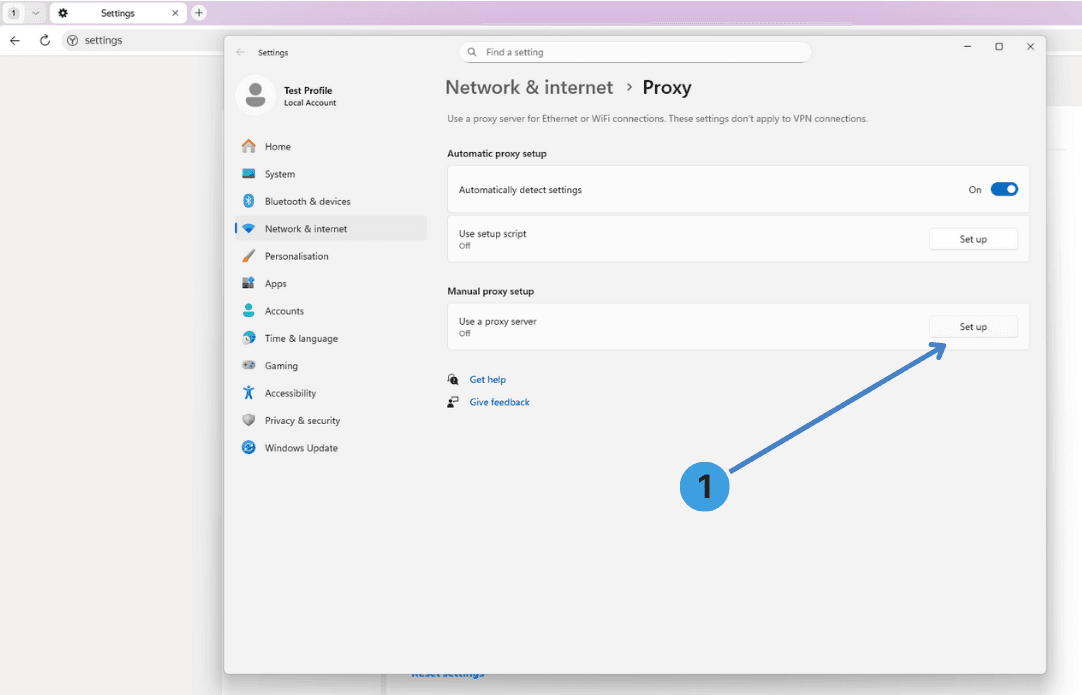
In the system Proxy panel, find Manual proxy setup and next to Use a proxy server click Set up (1). This opens the Edit proxy server dialog.
Step 4. Enable the proxy and enter its address
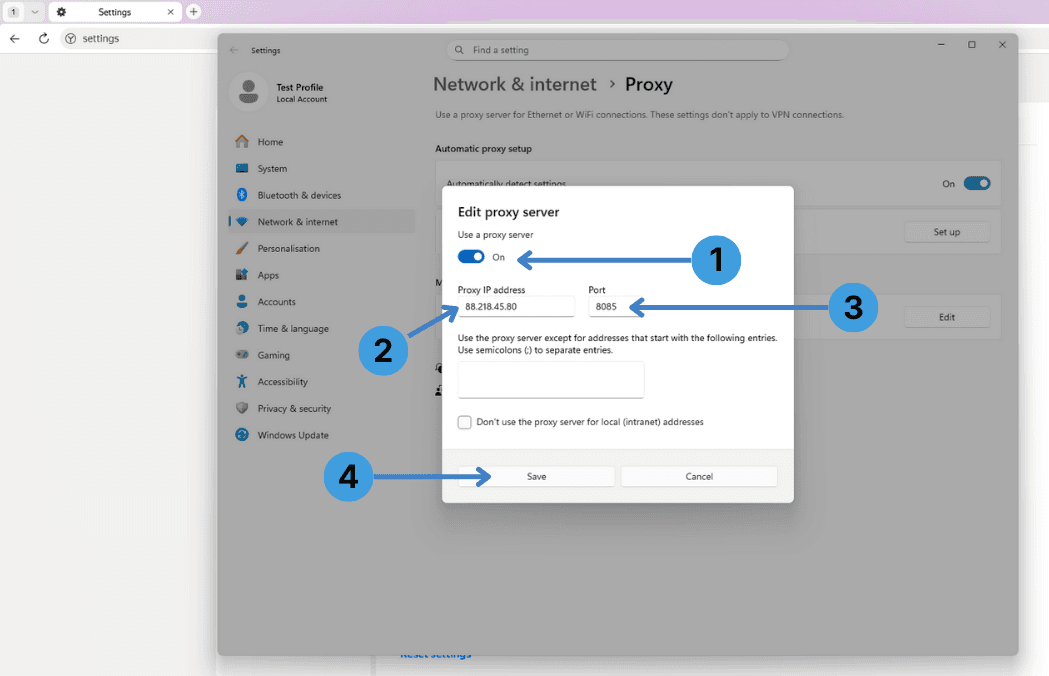
In the Edit proxy server window:
- Turn Use a proxy server to On (1).
- In Proxy IP address, enter the server address from your provider (2). This can be an IP or hostname.
- In Port, type the port number given by the provider (3).
- Optionally, fill the exclusion box if certain addresses should bypass the proxy.
- Click Save (4) to apply the changes. From now on, Yandex Browser traffic will go through this proxy because the browser follows the system proxy rules.
Step 5. Turn the proxy off when you no longer need it
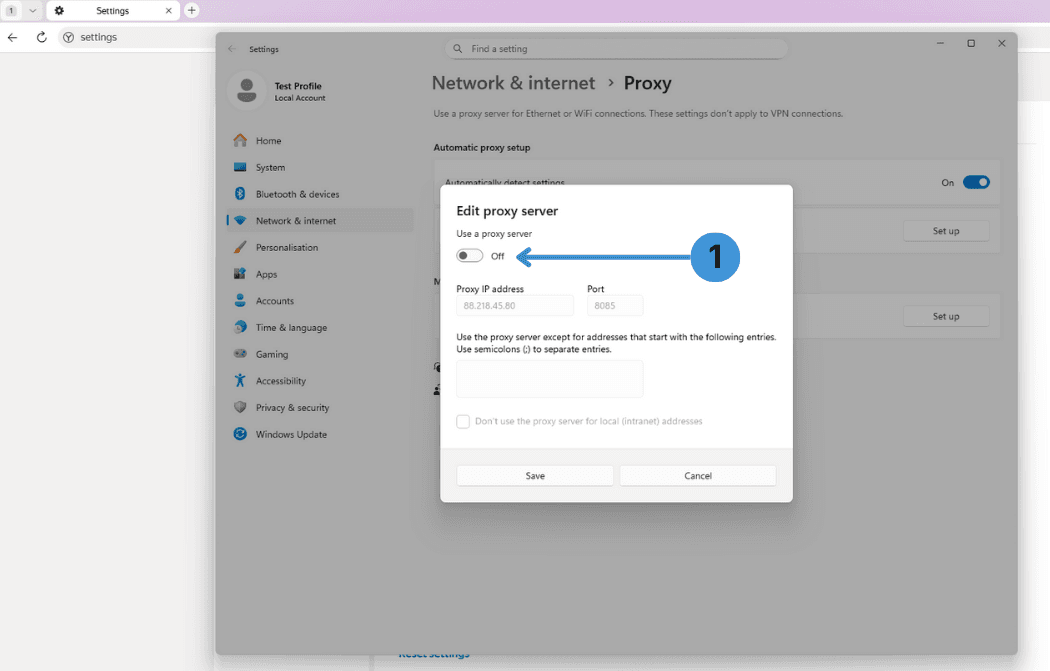
To stop using the proxy, return to the same Edit proxy server dialog and switch Use a proxy server to Off (1), then save the change. The browser will return to a direct connection.
Alternative method: proxy extensions in Yandex Browser
Because Yandex Browser is Chromium-based, it supports many proxy extensions that are also available for Chrome, such as SwitchyOmega (or ZeroOmega), FoxyProxy, Proxy Switcher, and Proxy Switcher and Manager. These add-ons let you keep multiple proxy profiles, switch between them quickly, and sometimes define rules per site or tab. For more background on this approach, see our guide to working with proxy extensions.
Use this option if you prefer to control proxies inside the browser instead of changing system-wide settings.
Alternative 2: using standalone proxy clients with Yandex Browser
Another option is to route Yandex Browser traffic through a desktop proxy client such as Proxifier or ProxyCap. These tools work at the application or system level and can redirect connections from selected programs through a proxy without touching the browser settings at all. This is useful when the same proxy has to be reused across several apps. A general overview of such tools is available in our overview of standalone proxy clients.
Conclusion
Yandex Browser can work with proxies through the system proxy settings, via specialized proxy extensions, or with the help of standalone proxy clients. Choose the method that best fits how often you change proxies and whether you want browser-only or system-wide control.